
The Ultimate Guide to Using a Free LLM API (Without the Headache)
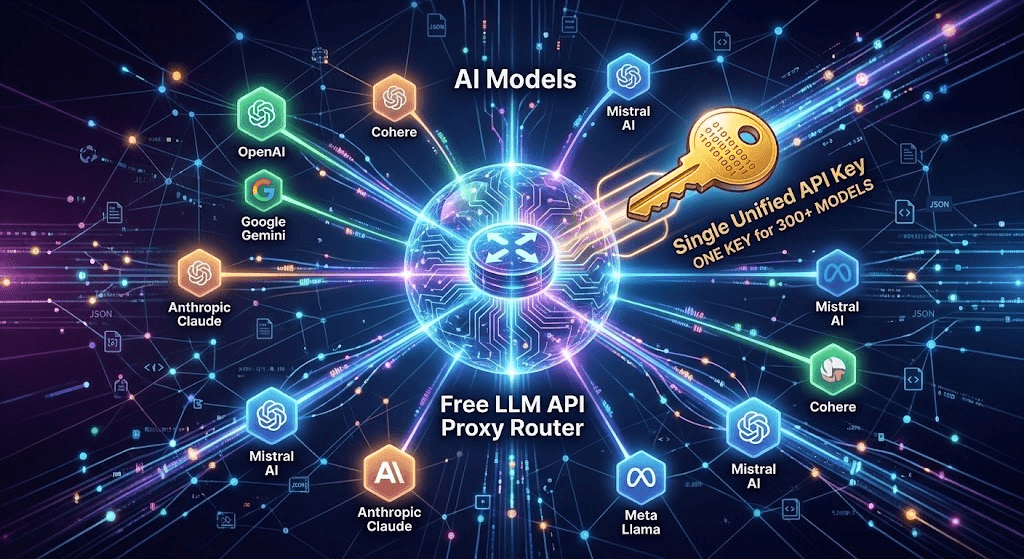
A free LLM API is an OpenAI-compatible proxy that aggregates the official free tiers of multiple AI providers behind a single endpoint. Instead of managing dozens of API keys, developers can use tools like FreeLLMAPI to access hundreds of models (like DeepSeek, Qwen, and Gemini) with approximately 4 billion free tokens per month, all while keeping data secure through self-hosting.
Who Needs a Free LLM API and Why?
Understanding who benefits most from this technology helps clarify its real-world value:
- Indie Hackers & Solo Developers: Building and validating AI prototypes without burning through early-stage capital.
- Students & AI Hobbyists: Experimenting with frontier models for learning, research, and personal projects.
- Small Engineering Teams: Testing multi-model routing and failover strategies before committing to paid enterprise API contracts.
The Real Problem : Searching for a "free AI API" typically leads to outdated blog posts, sketchy data-harvesting services, or the frustration of managing 10+ different API keys, each with unique rate limits, documentation, and sudden deprecations.
The Solution: A self-hosted, open-source router that automatically updates its catalog of free models and intelligently routes your requests to whichever provider currently has available quota.
How Free LLM API Aggregators Actually Work
Rather than magically generating compute, reputable free LLM APIs act as a smart, transparent routing layer. Here is the typical architecture:
Unified Endpoint: You receive a single /v1 endpoint that perfectly mimics the standard OpenAI API format.
Provider Stacking: The router connects to the official free tiers of roughly 28 different LLM providers simultaneously.
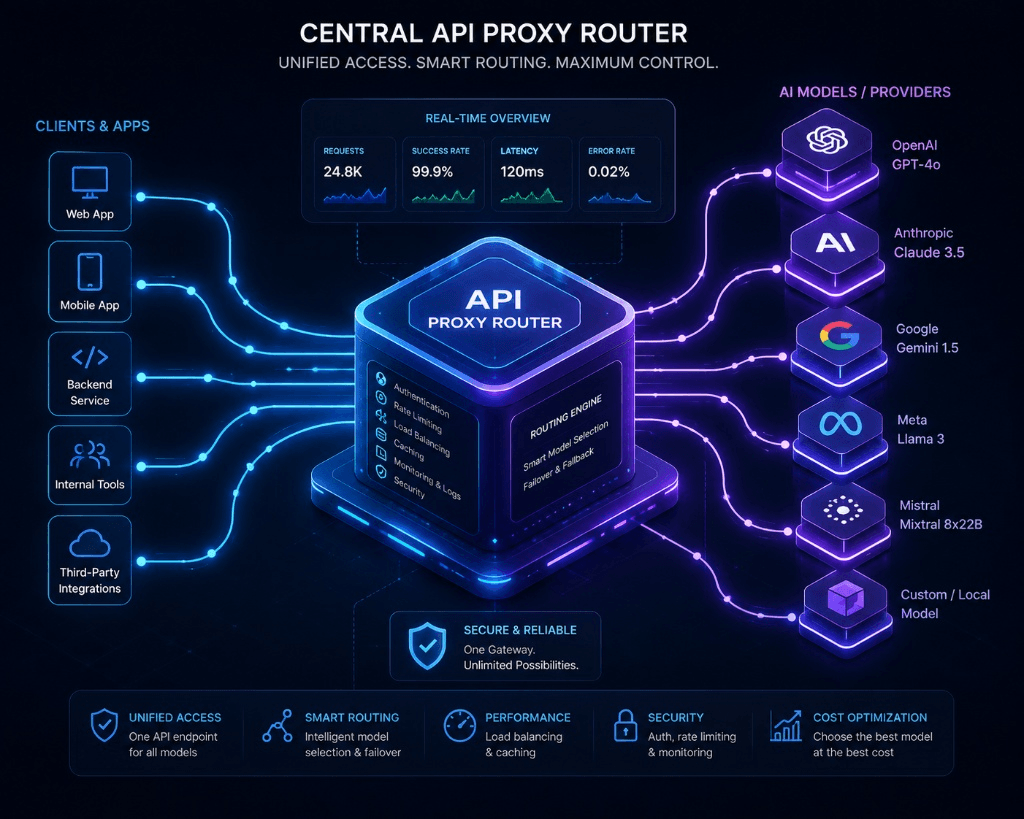
Automatic Failover: If one provider hits a rate limit or experiences downtime, the router seamlessly retries the request with the next available free endpoint.
Self-Hosted Privacy: Because the router software is open-source, you can host it locally. Your provider keys stay on your machine, and your prompts are not logged by a third-party middleman.
For instance, instead of juggling separate accounts for Moonshot AI (Kimi), NVIDIA, or various open-weight model hosts, the router evaluates your request and dispatches it to a provider with available free capacity. Many of these aggregated models now support massive context windows (e.g., 1M+ tokens), making them viable for document analysis and long-form coding tasks.
Key Features to Look For (and Common Myths)
When evaluating a free LLM API service, it is crucial to separate fact from fiction to maintain security and reliability:
- Myth: "Free APIs are always sketchy data harvesters."Fact: Open-source routers are fully transparent. You can audit the code on platforms like GitHub, and self-hosting ensures your API keys and prompt data never leave your own infrastructure.
- Myth: "Free means permanently unlimited for a single model."Fact: These services aggregate official free tiers. While the total collective pool is massive (~4 billion tokens/month), individual models still have rate limits. The router’s primary job is to navigate those limits for you.
- Live Catalog Updates: The best routers pull a signed model catalog automatically. This means new free models, quota changes, or endpoint fixes are added instantly without requiring you to manually update your software.
How to Get Started in 3 Simple Steps
Deploying a unified free LLM API is surprisingly straightforward, especially if you utilize a Docker-based or bash-script installation method.
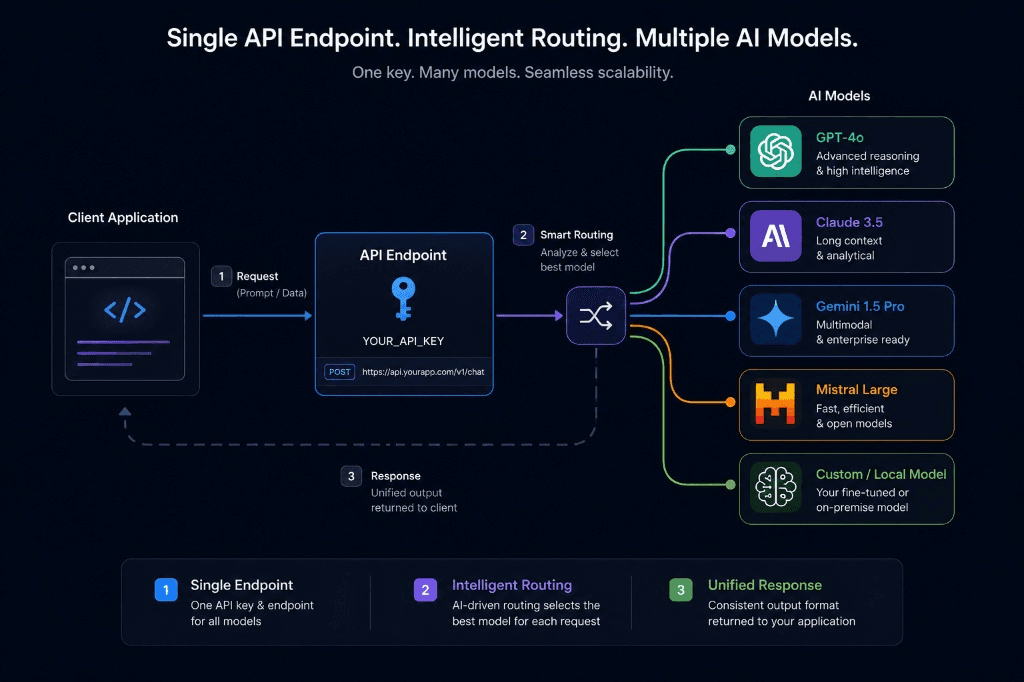
Choose Your Installation Method: The fastest way to get started is often a one-liner install script or a pre-configured Docker container. For example, running a simple curl command can securely set up the router on your local machine or server.
Configure Your Endpoint: Point your existing application to your new local or hosted router endpoint. Because it is OpenAI-compatible, no code rewriting is required.
Select Your Model: Request specific models (e.g., deepseek-ai/DeepSeek-V4-Pro or gemini-3.6-flash) through your unified key, and let the router handle the complex backend routing.
Best Practices for Production and Experimentation
To get the most out of a free LLM API while maintaining good standing with underlying providers, follow these guidelines:
- Use for Prototyping, Not Heavy Production: Free tiers are explicitly designed for experimentation and low-volume testing. If your application scales, expect to transition to a paid LLM gateway or direct provider billing.
- Monitor Rate Limits: Even with automatic failover, aggressive, high-frequency polling can get your IP temporarily blocked by underlying providers. Implement exponential backoff in your application code.
- Keep Your Router Updated: Ensure your self-hosted router is configured to fetch the latest signed catalog updates. This maintains your access to newly added free models and prevents routing to deprecated endpoints.
- Review the Landscape: Before committing to a specific router, it is wise to review broader industry comparisons to understand how different aggregators handle free tiers and rate limits.
Frequently Asked Questions
What is a free LLM API?
A free LLM API is an OpenAI-compatible proxy service that aggregates the free usage tiers of multiple AI model providers, giving developers a single API key to access hundreds of models without upfront fees.
Is it safe to use a free LLM API?
Yes, provided you use a reputable, open-source solution. Self-hosting the router ensures your API keys and prompt data remain on your own infrastructure, eliminating third-party data harvesting risks.
How many free tokens can I actually get?
Top-tier aggregators pool resources from dozens of providers, offering access to approximately 4 billion free tokens per month collectively, though individual model rate limits still apply.
Do I need to rewrite my code to use this?
No. Because these routers are designed to be strictly OpenAI-compatible, you can usually just change the base_url and api_key in your existing OpenAI SDK configuration.
Can I use a free LLM API for a commercial app?
Free tiers are generally intended for personal experimentation, testing, and prototyping. For commercial, high-volume applications, you should review the specific terms of service of the underlying providers or upgrade to a paid routing service.
Conclusion
Finding a reliable free LLM API no longer means scouring the web for broken links or compromising your data privacy. By leveraging an open-source, self-hosted router, developers can unlock seamless access to hundreds of frontier models through a single, OpenAI-compatible endpoint. Whether you are building your first AI prototype or experimenting with advanced multi-model failover, this approach provides the flexibility, security, and cost savings you need to innovate without limits.